metapixel

Meet the Veterans of "America at 250: Through the Eyes of Our Heroes"

They were teenagers and young adults when their country called. More than eight decades later, these remarkable men and women shared their firsthand stories of service, sacrifice and the experiences that helped shape their lives—and America. Meet the veterans whose voices helped bring America at 250: Through the Eyes of Our Heroes to life.

Meet the Veterans

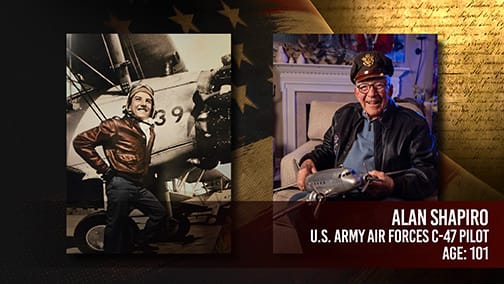
Veteran Alan Shapiro
Alan Shapiro Bio

“History is extremely important to know. So I would hope that youngsters today would say, ‘We’ve got a good thing here. I’m going to help.’”

At just 18 years old, Alan Shapiro joined the U.S. Army Air Forces and became a C-47 Skytrain pilot with the 316th Troop Carrier Group. He flew critical missions during the Battle of the Bulge and Operation Varsity, delivering supplies, evacuating wounded soldiers, and supporting airborne troops. Awarded France’s Legion of Honor, Alan remains passionate about preserving the lessons of World War II for future generations.
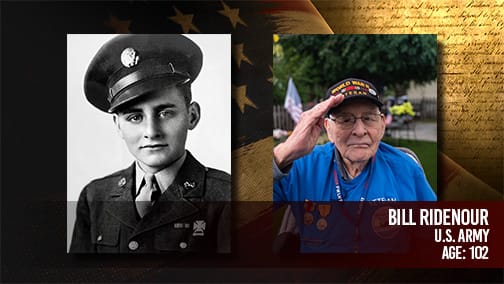
Bill Ridenour
Bill Ridenour Bio
Bill Ridenour served with the U.S. Army’s 182nd Infantry Regiment, Americal Division, fighting through brutal combat on Leyte and Cebu in the Pacific. He later prepared for the invasion of Japan and witnessed the war’s end from Tokyo Bay, his ship anchored beside the USS Missouri. After returning home, Bill devoted much of his life to his faith, family, and supporting fellow veterans.
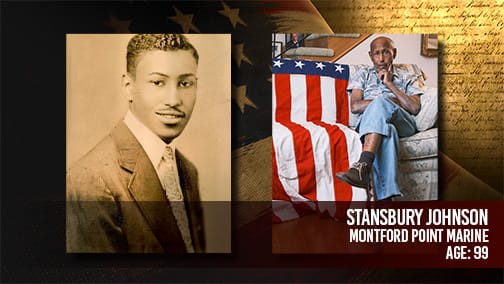
Stansbury Johnson
Stansbury Johnson Bio

“This flag didn’t happen without fighting and dying and praying.”

Stansbury Johnson served during World War II as one of the pioneering Montford Point Marines, the first Black Americans to serve in the U.S. Marine Corps. Serving in a segregated military, he persevered with dignity and pride while helping open doors for generations who followed. Decades later, his service was recognized with the Congressional Gold Medal, honoring the historic contributions of the Montford Point Marines.
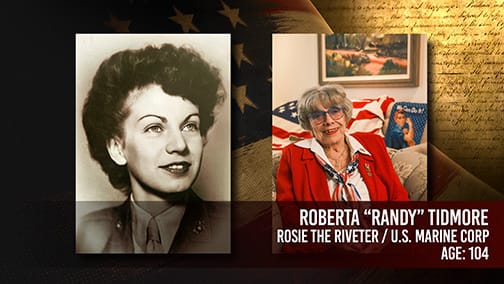
Veteran Roberta "Randy" Tidmore
Roberta "Randy" Tidmore Bio

“Oh my, we’re so glad it still can wave in freedom over these United States of America, and we have freedom of speech, freedom of worship.”

Roberta “Randy” Tidmore began her wartime service as a Rosie the Riveter, building B-26 aircraft components before enlisting in the U.S. Marine Corps in 1944. One of approximately 18,000 women Marines during World War II, she served for 2½ years and attained the rank of Sergeant. Randy continued a lifetime of service after the war through leadership, volunteer work, and support for fellow veterans.
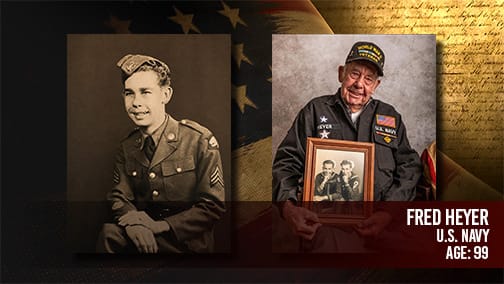
Fred Heyer
Fred Heyer Bio
Fred Heyer joined the U.S. Navy in March 1945 and served during the final months of World War II. After processing returning servicemen in Seattle, he served aboard the minesweeper USS Clamour, helping prepare the ship for decommissioning. Fred later returned to active duty at Naval Air Station Millington, where he assisted veterans with training and service activities, continuing his commitment to those who had served.
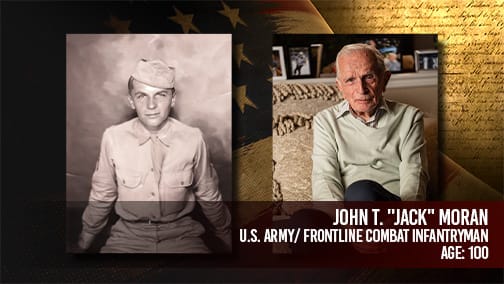
John T. "Jack" Moran
John T. "Jack" Moran Bio
Jack Moran enlisted in the U.S. Army at just 17 and was later assigned to the 87th Infantry Division. Arriving in Europe in December 1944, he fought through France, Belgium, and Germany, including the brutal Battle of the Bulge. After Germany surrendered, Jack was preparing for the planned invasion of Japan. Today, he continues sharing his firsthand experiences so future generations understand the sacrifices of World War II.
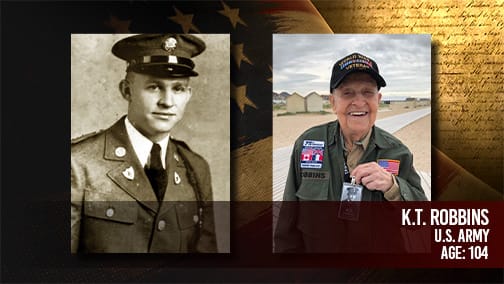
K.T. Robbins
K.T. Robbins Bio
K.T. Robbins served with a mobile Army bakery unit, producing thousands of pounds of bread each day to feed American troops. He entered France through Utah Beach and later served during the Battle of the Bulge. While in France, K.T. fell in love with a young French woman he was forced to leave behind. Seventy-five years later, the two were reunited in Normandy, capturing hearts around the world.
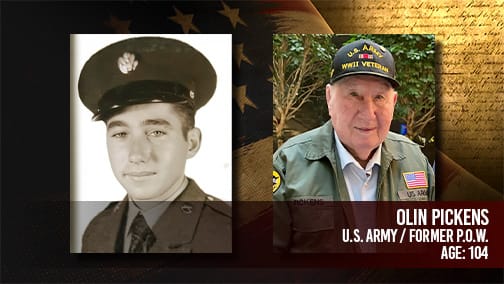
Olin Pickens
Olin Pickens Bio

“As bad as it was, I would do it again for our freedom.”

Olin Pickens served with the U.S. Army’s 805th Tank Destroyer Battalion in North Africa, where he was captured by German forces in 1943. He endured more than two years as a prisoner of war, surviving starvation, forced labor, an escape, and recapture before being liberated in April 1945. Throughout captivity, Olin held onto a promise he had made to his parents—that he would come home when the war was over.
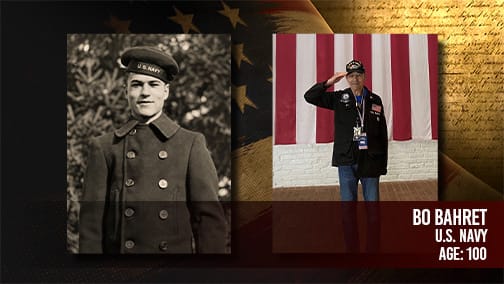
Bo Bahret
Bo Bahret Bio
Bo Bahret enlisted in the U.S. Navy in 1943 and served as an officer aboard destroyers including the USS Norris, USS Hood, and USS Vogelgesang. Serving primarily in the Atlantic and Mediterranean, Bo experienced the war from the decks of the ships protecting America’s interests at sea. His military career continued into the Korean War, giving him the remarkable distinction of serving his country through two major conflicts.
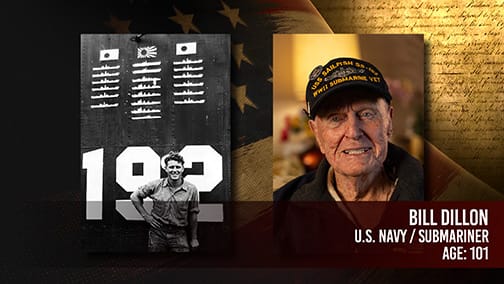
Veteran Bill Dillon
Bill Dillon Bio

“What does America mean to me? It is the freest nation in the world. I’m happy that I fought to preserve that.”

Bill Dillon left high school after Pearl Harbor and enlisted in the U.S. Navy, serving 5½ years and becoming a submariner in the Pacific Theater during World War II. After the war, he earned an engineering degree and helped shape America’s future, working at Cape Canaveral on early space-launch systems and later contributing to the development of GPS technology.
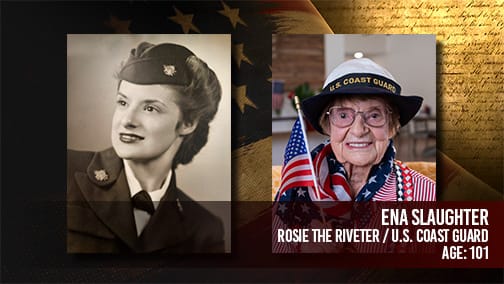
Ena Slaughter
Ena Slaughter Bio

“I’m so glad to be an American. I know that’s an old saying, but it’s true.”

Ena Slaughter served America’s war effort first as a Rosie the Riveter, working at Wright Field testing fuels and other military materials for possible sabotage. Wanting to do even more, she enlisted in the U.S. Coast Guard in 1945 and served as a hospital corpsman. Ena’s remarkable story represents the vital contributions of women whose service, faith, and patriotism helped carry America through World War II.
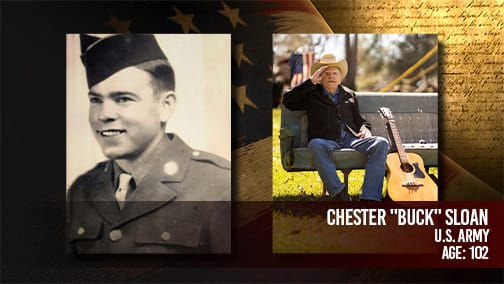
Chester Sloan
Chester "Buck" Sloan Bio
Chester “Buck” Sloan landed on Omaha Beach on D-Day +1 and later became a BAR gunner with the 2nd Infantry Division, fighting from Normandy through Belgium. He captured more than 30 German soldiers and was wounded by a grenade during the Battle of the Bulge, earning the Purple Heart. After the war, Buck found healing through faith, family, and music, becoming an accomplished musician and songwriter.
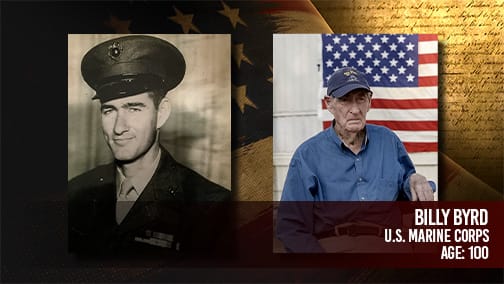
Billy Byrd
Billy Byrd Bio

“Just keep on living clean lives and live instead of hate and trust in the Lord. That’s the main thing.”

Billy Byrd joined the U.S. Marine Corps at 18 and served with the 5th Marine Division, 28th Marines, during the Battle of Iwo Jima. His unit helped capture Mount Suribachi, where Billy endured intense cave fighting and heavy casualties. During the battle, he risked his life attempting to rescue a wounded Marine under enemy fire. After Iwo Jima, Billy prepared for the planned invasion of Japan.
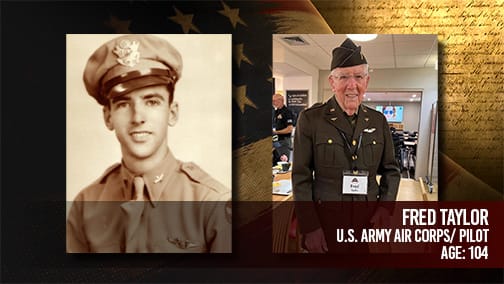
Fred Taylor
Fred Taylor Bio
Fred Taylor was attending college when Pearl Harbor was attacked and immediately joined the U.S. Army Air Corps Reserve. After extensive flight training, he flew the P-40 Warhawk and later the legendary P-51 Mustang while stationed in Italy. Two of Fred’s brothers also served during World War II, and all three returned home. At 104, Fred remains a remarkable voice for service, sacrifice, and national unity.
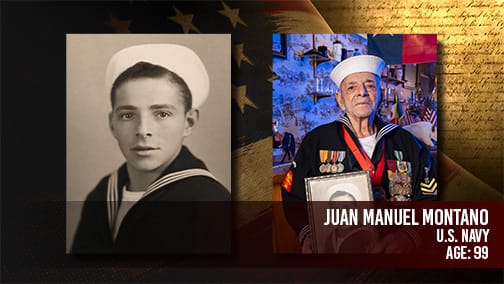
Juan Manuel Montaño
Juan Manuel Montaño Bio
Juan Manuel Montaño enlisted in the U.S. Navy as a teenager and served as a Higgins boat coxswain, carrying Marines and equipment onto beaches under enemy fire. He participated in major Pacific campaigns including Makin Island, Leyte, Luzon, and Iwo Jima, and once turned back under heavy fire to rescue a stranded landing craft and fellow coxswain. Juan ultimately served approximately 20 years in the Navy.
Luke McLaurine
Luke McLaurine Bio
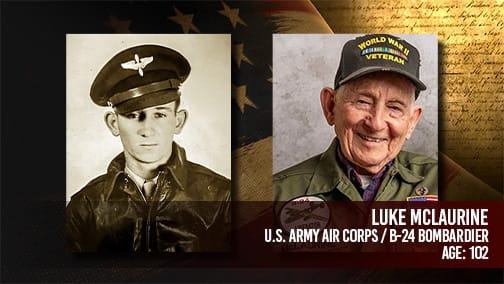
Luke McLaurine served as a B-24 Liberator bombardier, flying combat missions from Italy over Europe. In November 1944, engine failures forced his crew to bail out over Yugoslavia, where Luke was captured and later imprisoned at Stalag Luft III. After enduring captivity and a forced march, he was liberated in April 1945. Luke returned home with a deepened faith and a lifelong appreciation for freedom and remembrance.
Don Graves
Don Graves Bio
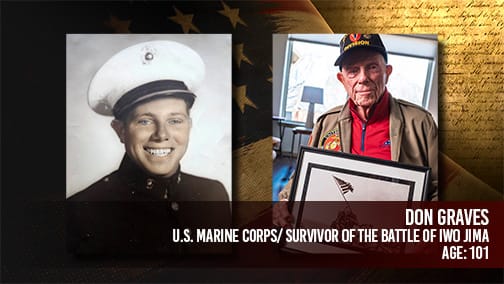
Don Graves served with the U.S. Marine Corps during the Battle of Iwo Jima, carrying a flamethrower—one of the most dangerous assignments on the battlefield. Landing in an early wave on February 19, 1945, he fought to clear caves, pillboxes, and fortified positions and witnessed the American flag raised over Mount Suribachi. After the war, Don devoted decades of his life to faith, ministry, and sharing his story with future generations.
Walter Travis
Walter Travis Bio

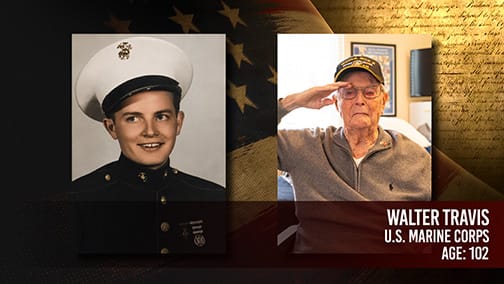
“I love this country and I think everybody should, because we are free to do what we want and we can be what we want. Just have to work at it.”

Walter “Walt” Travis enlisted in the U.S. Marine Corps in 1942 and served with Marine squadron VMF-115 in the Pacific. He helped build vital airfields across the islands while enduring bombardment and harsh jungle conditions, including service at Guadalcanal. Later assigned to a hospital ship, Walt witnessed another cost of war while guarding severely traumatized servicemen. His story reflects courage, endurance, and a lifetime of service to others.

Meet the Historians
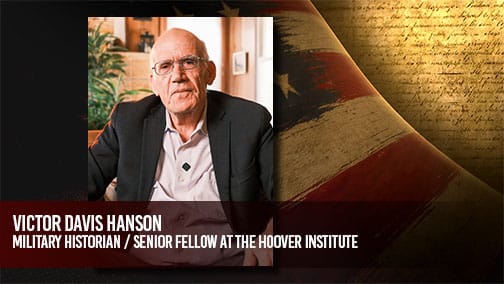
Meet the historians and educators who helped place these firsthand stories within the larger American experience.
Victor Davis Hanson
Victor Davis Hanson Bio
Victor Davis Hanson is a distinguished military historian, classicist, author, and Senior Fellow at the Hoover Institution at Stanford University. The author of numerous books examining warfare and history, including The Second World Wars, he brings decades of scholarship to understanding the conflicts that shaped America and the world. In America at 250, Hanson provides historical perspective connecting the experiences of our veterans to the larger American story.
Jeff Stoffer
Jeff Stoffer Bio
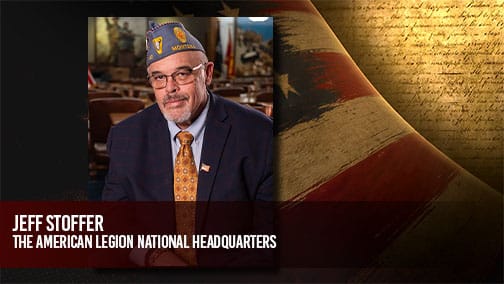
Jeff Stoffer is a longtime journalist, historian, and veterans advocate who serves as Director of Media & Communications for The American Legion and editor of The American Legion Magazine. Since first visiting Normandy in 2006, Jeff has returned regularly to document D-Day commemorations and preserve the stories of America’s veterans. In America at 250, he brings a unique perspective on service, sacrifice, remembrance, and the enduring legacy of America’s veteran community.
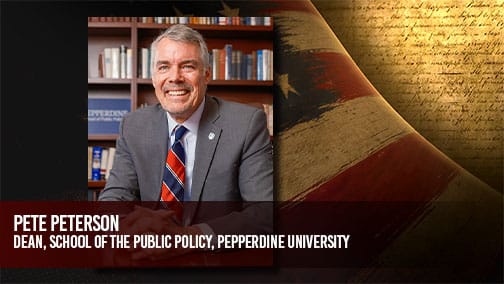
Pete Peterson
Pete Peterson Bio
Pete Peterson is Dean of Pepperdine University’s School of Public Policy and a nationally recognized writer and speaker on civic participation, public leadership, and citizenship. Bringing the perspective of a historian, educator, and man of faith to America at 250, Pete helps connect the experiences of America’s veterans with the broader story of our nation and the responsibility of passing its history on to future generations.
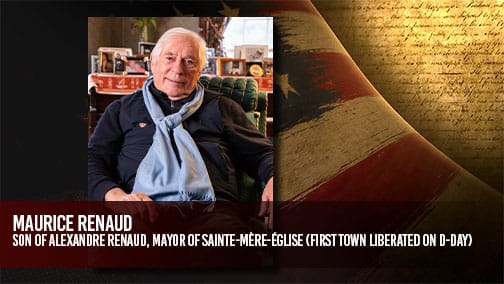
Maurice Renaud
Maurice Renaud Bio
Maurice Renaud is the youngest son of Alexandre Renaud, wartime mayor of Sainte-Mère-Église, and Simone Renaud, remembered as the “Mother of Normandy.” As president of the Amis des Vétérans Américains, Maurice has devoted decades to honoring American veterans and preserving the legacy of D-Day. In America at 250, he brings a uniquely personal French perspective on liberation, remembrance, and the enduring friendship between France and the United States.

Their Stories. Our History. Our Responsibility to Remember.

The World War II Heroes Foundation is committed to preserving the firsthand stories of America’s veterans and making their experiences available to future generations through documentary films and educational resources.
Every donation supports the World War II Heroes Foundation’s mission to document, preserve, and share the firsthand experiences of the men and women who shaped our nation’s history. Together, we can ensure these voices continue to educate and inspire future generations.